
Thank you to Piedmont Health/WIC for hosting the SAFE Infant and Young Child Feeding in Emergencies training – Protecting Our Smallest in Big Crises: Infant and Young Child Feeding in Emergencies (IYCF-E) – on Friday, 24 July 2026.
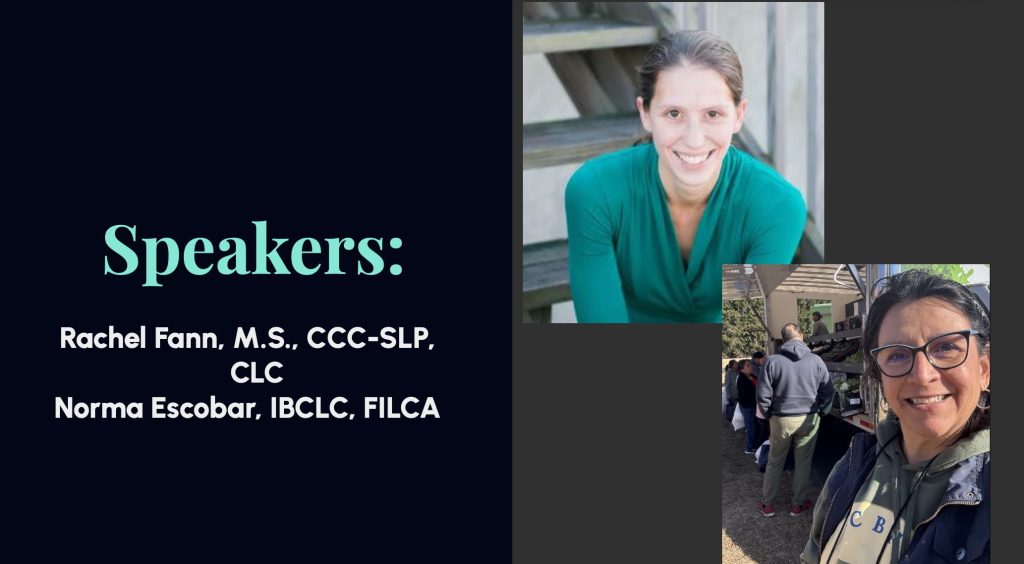
The presenters were Rachel Fann and Norma Escobar, members of the SAFE (Support and Advocacy for Infant Feeding in Emergencies) Infant Feeding Team that “emerged from Breastfeeding Family Friendly Communities (BFFC) and the North Carolina Breastfeeding Coalition, both long-standing leaders in lactation equity and maternal-child health…[and]…has evolved into a dedicated network of infant feeding specialists, volunteers, and advocates.” (https://safeinfantfeeding.org)
The training has its roots in the SAFE Team rapid-response efforts during and after Hurricane Helene, the natural disaster that devastated communities in Western North Carolina, and builds on the work of national and global organizations and agencies to support IYCF-E. A powerful quote in a slide early in the presentation is at the heart of the training and answers the fundamental question “Why IYCF-E Matters?“
100% of infants are vulnerable when infrastructure fails. Traditional disaster plans often over-simplify or overlook the specific needs of the 0–24 month population or assume families will “figure it out.”
A Few Key Points
Breastfeeding remains the safest way to feed an infant during a natural disaster. Breastfeeding parents are able to continue to make enough milk for their children; however, they need reassurance and support during this stressful time. Knowing this, we need to ask:
• Do emergency policies include creating designated areas in shelters to provide privacy, safety, and a calm environment for the nursing dyad?
• Do we train our emergency staff and volunteers to support breastfeeding families?
Too often, the first response from well-meaning emergency workers and volunteers in shelters and food distribution centers has been to give formula to families, even to parents who are breastfeeding or combining breastfeeding with formula feeding. Training and resources for emergency workers about the importance of supporting continued breastfeeding is vital. This raises the question:
• Are emergency workers and volunteers trained in the CDC Rapid Needs Assessment for IYCF-E?
Families that are formula-feeding need support and guidance to help them feed their babies safely during an emergency.
• Do policies include providing safer formula-feeding options, such as ready-to-feed formula with disposal nipples?
• Are emergency workers and volunteers able to determine the safety of feeding supplies in shelters and distribution centers?
The Centers for Disease Control and Prevention (CDC) urges people not to donate infant formula and instructs communities to avoid soliciting or accepting infant formula.
• How will the emergency management team control infant formula donations?
The presenters used the phrase “blue sky” to describe the period before a disaster strikes. These key points and other tools and resources from the training can help to guide the development of IYCF-E policies and practices in our community while we are in a blue sky period.
Training Opportunities
Reach out to the SAFE Team for more information about the “Training for responders and volunteers on trauma-informed, family-centered infant feeding practices in crises“. An interest form is included at the bottom of the page. (https://safeinfantfeeding.org/about-us/technical-assistance-and-capacity-building-services/)
Resources
From the Training Workshop:
• NC SAFE Infant and Young Child Feeding in Emergencies (IYCF-E)
– County Policy Adoption Toolkit
– A Readiness Self-Assessment Tool for County and Municipal Emergency Managers
• Centers for Disease Control and Prevention (CDC)
– Infant Feeding in Emergencies Toolkit
– Rapid Needs Assessment Intake for IYCF-E
Additional Resources:
• Breastfeeding Family Friendly Communities
– Infant and Young Child Feeding in Emergencies
• Carolina Global Breastfeeding institute (CGBI)
– Resources: Lactation and Infant Feeding in Emergencies for Early Care and Education (ECE)
One More Thought…
During the training, we learned that Orange County has a 95% breastfeeding initiation rate and is a leader in the Piedmont Region. Breastfeed Orange NC is grateful for the dedication of healthcare and lactation support providers in our community to help families successfully breastfeed. For emergency workers in Orange County, knowing that most parents initiate breastfeeding in our community provides valuable information for emergency preparation. Thank you to all for participating in the training!